
Why let children be unknown?
Students can gain a lot from the anonymity of the crowd too

Most of the time, I advocate for children to access learning spaces where they feel seen, feel safe and feel like somebody.
Too many children have their needs overlooked, their virtues ignored and their needs unheard.
All have an often-neglected right to visibility.
But whenever we deal in absolutes, I always find it helpful to think ‘oppositely’.
If I am advocating for visibility, I need to look at the invisibility too - what are the benefits to a child of being unknown and anonymous?
How my work with children relates to visibility
Most of my work in schools is explicitly about helping children to become more ‘visible’ to themselves and their teachers.
The Poetry Retreats I run protect space for self-expression, reflection and talk. We try, safely, to encourage children to speak up and share their thoughts on reality as they experience it.
The Iliad Project works differently, but it too, has subtle social learning within it. Across the sessions, I am encouraging the children to think, to notice their viewpoints as they emerge, and to explore how their interpretations of myth/story relate to those of their friends. It gently nudges children to raise their flag - to step up onto a stage, to articulate themselves, to perform a script, to playfight, to entertain, to roar.
How my work with children relates to invisibility
I have a few other projects that I do that are very different, and I barely talk about them.
I love quizzing and one of the other things I do is lead US-style ‘Bee’ competitions - the Geography Bee, the History Bee.
I recognise now that there is a pleasurable ‘anonymity’ to taking part in these projects, which is absent from the other work I do.
In the competitions, children join us from a range of local schools. They are in teams of three, they’ve been chosen by their schools and they’ve been studying independently in the month leading to the competition.
This confederacy of studious hermits gathers in an assembly hall for a day of a hundred questions. What matters to them is the facts, their reading, their research, and their communication with each other.
Good vibes fill the hall but in a very opposite way to the Poetry Retreat. In the Bee, our interactions are in some way superficial: they know and I know that we are only together for a few hours, we’re not here to forge lasting connection.
The children don’t do names, even.
What are the benefits of children ‘not being known’
I noticed something interesting. The host school was the school I work in most often. I’ve known and taught the 11-year-old contestants from that school since they were 6.
I noticed how differently they interacted with the children from the other schools.
None of them was a prisoner of their reputation, because … nobody had one.
They arrive as strangers, interact as strangers, and leave as strangers, but it’s nice. There’s a curious joy to the closeness of strangers, and across the day, they play together during break time, cheered each other on, went for a wander in the forest together, and bantered with each other across the tables.
I had a kid helping me out as my Quiz Assistant all day, and he was a hit with the other schools, who found his quips and asides very funny.
“Good job, Question Guy!” one of the kids said to him, jokingly, at the end.
My assistant beamed.
It has left me recognising the wrongness of my division between my “social projects” (The Poetry Retreats, The Iliad, Mythology workshops, Poetry workshops) and my “academic projects” (The Geography Bee, The History Bee).
It’s just a different kind of social learning, as the Iliad Project is a different kind of academic learning.
Here’s what I think I believe:
All children deserve to be seen, to feel safe and to feel like somebody
All learning is - to some extent - social learning; acknowledging this can deepen its social benefits, whilst also unlocking deeper academic and philosophical benefits
All children also need the chance to encounter new groups of children, so that they can be different version of themselves in new contexts
Some children express themselves through their knowledge, and some children express their knowledge through their selfhood.
Children should be given the opportunities to be the one in the limelight, the one being seen, the one being attuned to and really listened to.
And children also should be given opportunities to interact outside of their usual groups, to become an ‘unknown’ entity quite regularly, to have the chance to build a new identity for themselves.
When we learn to attune, being unknown does not need to mean being unseen.
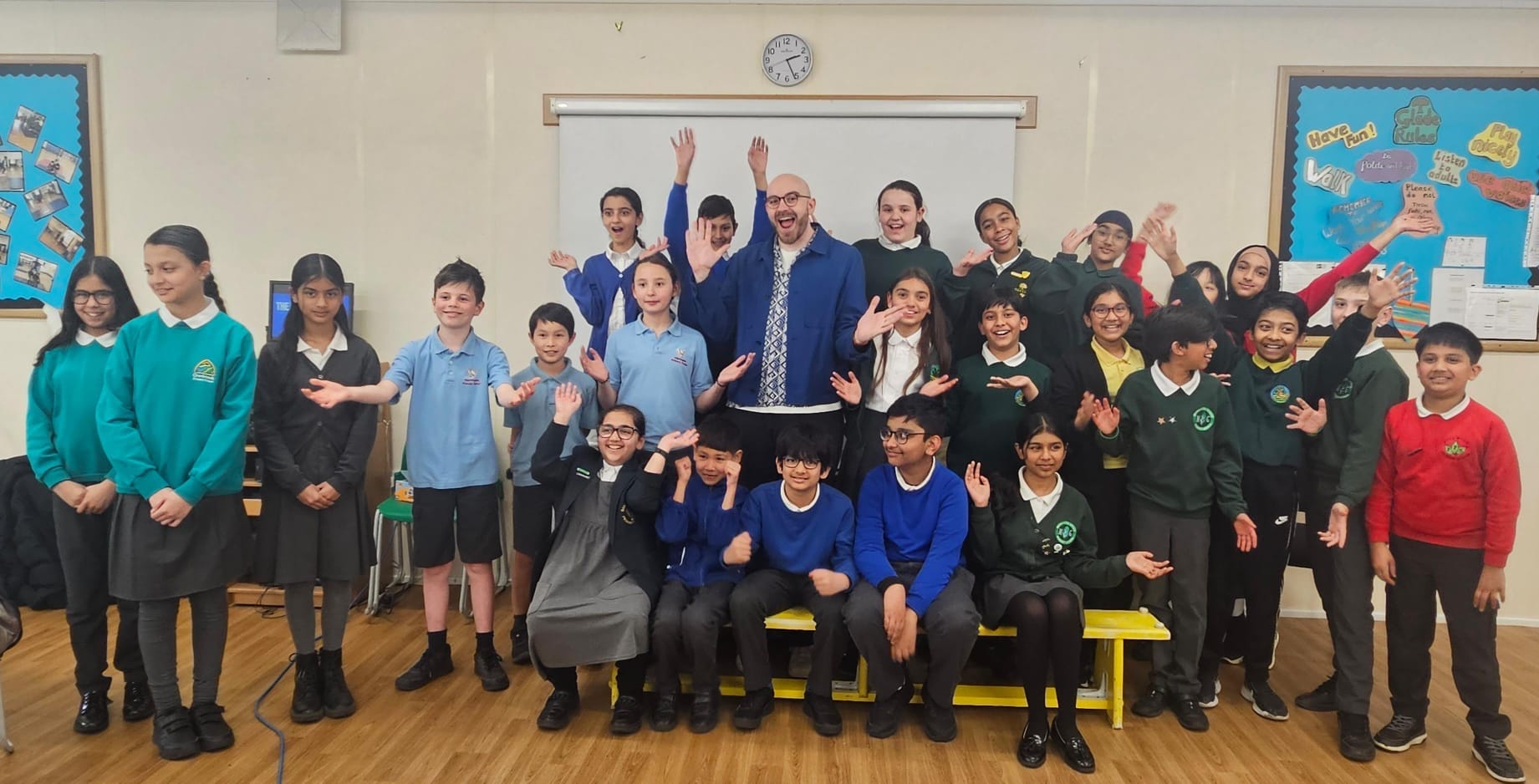
Been seen and unknown can be exciting, dynamic and transformative for a child
.
You make such a valuable point here, Jonny. You took me back to a reading challenge day I took a selection of students to last year, which hosted at least 12 different schools. I remember sitting back and remarking to my colleague how amazing it was to not only see the children collaborate so naturally and effectively during the structured part of the day but to be chatting away, playing football and eating their snacks together during play time. I have not thought to shine such a direct light on 'invisibility' before but now reflecting back - you have truly got me thinking. Thank you!
I really enjoyed reading this, Jonny. I think it’s so interesting how you notice these differences between your projects and question the ideas of visibility and invisibility. Does a kind of invisibility lead to a different kind of visibility? There have been times in my life I’ve had conversations with strangers where I ‘showed’ myself way more than I ‘showed’ myself to non-strangers. I also think this is the appeal of why people call listening lines rather than talk to their friends. Sometimes being completely new to an interaction is a refreshing chance to start from the beginning without anyone having preconceptions or a pre-narrative, I guess. I love how you notice all these dynamics with the children and the work you do and hope you will continue to develop your work!